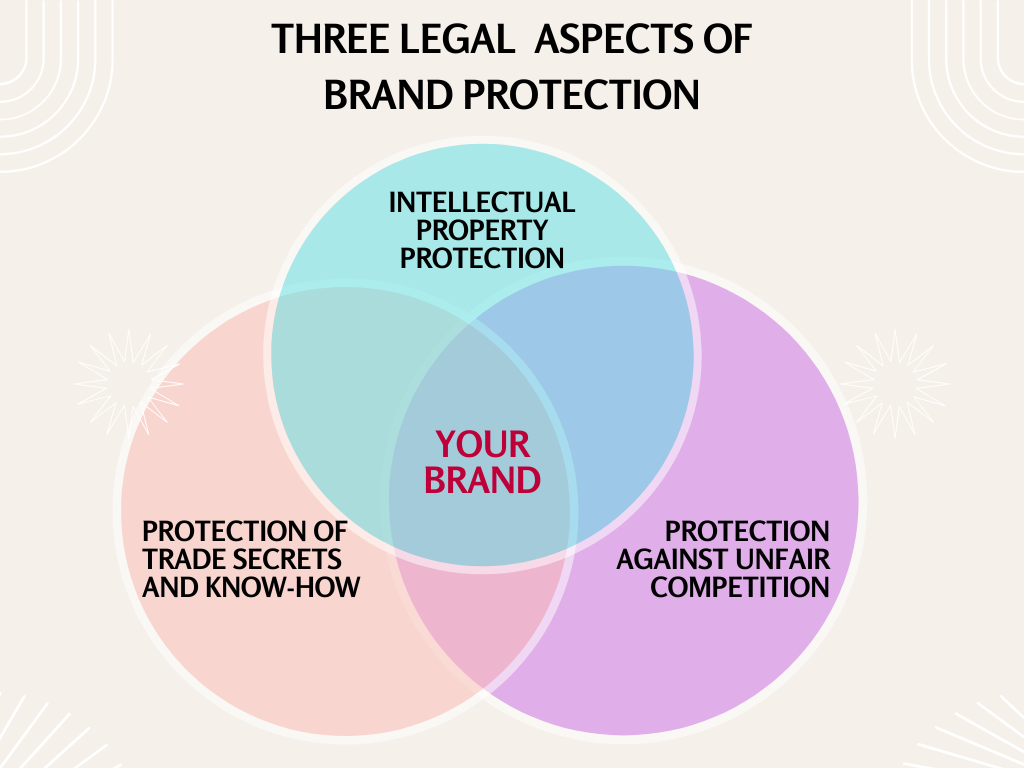


If you develop software, run an online business, build a brand, or invest in the production and sale of goods, your most valuable assets are often not visible at first glance. These include your brand name, trademark, product design, code, website content, databases, client contracts, as well as your unique know-how in Serbia. All of this generally falls within the broader field known as intellectual property in Serbia. Once your product or service becomes recognizable, real risks of copying, misappropriation, or unlawful use appear. At that moment, intellectual property protection in Serbia stops being an abstract legal concept and becomes a very concrete tool for safeguarding your business.
Beyond these risks, intellectual property also represents a revenue opportunity. Since these rights may be licensed to third parties for compensation and frequently constitute a key driver for investment in a company, intellectual property in Serbia is a valuable asset in its own right.
This text serves as a legal guide explaining how intellectual property protection in Serbia works in practice, what types of procedures exist, how trademark protection in Serbia functions, how copyright protection in Serbia operates, what protection of trade secrets in Serbia entails, and what constitutes unfair market conduct, that is, unfair competition in Serbia.
The key legal frameworks
Intellectual property protection in Serbia is regulated through several groups of statutes and various procedural avenues. In practice, the following areas most commonly intersect.
Procedural rules for achieving intellectual property protection in Serbia
Criminal-law protection applies through provisions safeguarding copyright and related rights, industrial property rights, design, trademarks, and other forms of intellectual property in Serbia. Criminal-law protection is triggered when an infringement exceeds the level of an ordinary dispute and takes on the character of serious misuse or organized activity aimed at gaining financial benefit, or when the infringement is severe enough to require criminal sanctions. In addition, legislation in the field of intellectual property establishes numerous business offenses and misdemeanors carrying substantial fines.
Civil-law protection takes the form of lawsuits for infringement, damages, injunctions, and destruction of goods used to infringe. Through civil proceedings, the rights holder seeks judicial confirmation of the infringement and measures that ensure future protection.
Inspection procedures for infringement of intellectual property rights in Serbia are conducted by the market inspection authorities and other competent bodies with the power to temporarily seize goods, prohibit the performance of activities, and file reports with competent authorities. This gives intellectual property protection in Serbia a fast, field-based enforcement mechanism.
Trademark protection in Serbia is ensured through an administrative trademark registration procedure, which is essential for any company or individual building a recognizable name, logo, visual identity, and brand.
Substantive legislation guaranteeing protection
Copyright protection in Serbia is guaranteed by the Law on Copyright and Related Rights, which contains provisions on unauthorized use of copyrighted works, software, databases, phonograms, and broadcasts. Full copyright protection is particularly important for the IT sector, media, creative industries, and all who rely on content creation.
Trade secret protection and know-how in Serbia are governed by a dedicated law distinguishing lawful from unlawful acquisition, use, and disclosure of protected information, and providing a specific action for trade secret infringement. Within this framework, know-how in Serbia becomes a legally protected resource rather than merely “unwritten knowledge”.
Protection against unfair competition in Serbia is established by the Law on Trade, which sanctions unfair market practices, consumer confusion, misuse of trade secrets, and other acts that distort fair competition. Unfair competition in Serbia often accompanies trademark infringements and product imitation.
Intellectual property protection in practice in Serbia
Criminal-law protection of intellectual property in Serbia
The Criminal Code of the Republic of Serbia defines offenses against intellectual property. These include publishing someone else’s copyrighted work under one’s own name, unauthorized copying, recording, public communication, removal of electronic rights-management information, and unauthorized use of patents or protected designs.
Typical copyright-related criminal cases include unauthorized copying of software, databases, or video content and offering them to the public. If done for financial gain, stricter penalties apply.
Business offenses and misdemeanors are particularly relevant for legal entities and entrepreneurs. When a company infringes a trademark, the Trademark Act prescribes heavy fines, product seizure, destruction of infringing goods, and publication of the judgment.
Civil-law protection of intellectual property in Serbia
Civil-law protection is the most flexible and most frequently used mechanism. The key instrument is an infringement lawsuit with a claim for damages. The rights holder may seek a declaration of infringement, cessation of the infringement, removal of infringing markings from goods, and compensation for damage.
Trademark protection in Serbia is especially visible when a competitor uses a sign similar to your registered trademark, confusing average consumers. The court may prohibit further use, impose additional measures, and award damages.
Similarly, copyright protection in court allows the rights holder to request cessation of use and similar measures. A crucial element is proving authorship. Depositing a copyrighted work with the competent authority is a powerful way to prove prior authorship.
In practice, combining deposit, assignment agreements, and well-structured intellectual property protection in Serbia within employment and contractor agreements significantly strengthens the position of the rights holder. Lawsuits then become the final step, not the starting point.
Inspection procedures and the role of the market inspection authorities
When infringement occurs in the course of trade in goods or services, inspection procedures for infringement of intellectual property rights in Serbia are a crucial mechanism. The market inspection authority has the power to verify on the spot whether goods infringing trademarks, designs, patents, copyrights, or other rights are being sold. If an infringement is confirmed, the inspector may seize the goods and impose a temporary ban on business operations. This also applies to software, computer programs, and other unauthorized uses of copyrighted creations, particularly in the IT sector.
The inspection simultaneously collects samples, prepares reports, and initiates appropriate actions, building the evidentiary basis for further proceedings. Intellectual property protection in Serbia, therefore, starts in the field, as soon as counterfeit goods appear on the market. In practice, this is often the first step toward criminal-law protection or civil litigation.
Inspection procedures can be initiated ex officio or upon request by a competitor or a rights holder. Rights holders should promptly notify an attorney who may file a request with the competent authority.
Unfair competition in Serbia as a parallel front
Unfair competition in Serbia is a specific form of infringement targeting not only trademarks or copyright but also your business reputation and market position. The Law on Trade defines unfair market practice as conduct that violates good business customs and harms or may harm another trader. Typical examples include marketing visually similar products, using similar names, spreading false claims about your business, or misusing your trade secrets.
In such cases, a combination of trademark protection in Serbia, copyright protection in Serbia, and protection against unfair competition in Serbia is often applied. This addresses both the reputational damage and the violation of formal intellectual property rights. Courts may order cessation of harmful acts, award material and non-material damages, and require publication of the judgment.
Trade secrets and know-how in Serbia
These resources, trade secrets, and know-how in Serbia are often the most valuable yet least protected within a company.
A trade secret includes information that is not generally known, has commercial value, and is protected by reasonable measures. This may include formulas, recipes, technical specifications, algorithms, client data, pricing structures, and internal processes.
Trade secret protection in Serbia functions on two levels.
- The preventive level includes confidentiality agreements, internal policies, IT security, and clear procedures.
- The enforcement level includes lawsuits for trade secret infringement, where the plaintiff may seek a declaration of infringement, prohibition of use or disclosure, withdrawal of infringing goods, destruction of documents, and damages. When properly applied, trade secret protection becomes as important as intellectual property protection in Serbia.
Know-how in Serbia, as a set of knowledge and experience, is often protected as a trade secret. When an employee or partner discloses your know-how to a competitor who then uses it on the market, grounds exist for a trade secret infringement claim. Combining contracts and litigation is the most efficient method of protecting trade secrets and know-how in Serbia.
Contractual protection of intellectual property as the first line of defense in Serbia
Contracts should be the first layer of intellectual property protection in Serbia. These include copyright agreements, licensing agreements, franchise agreements, software development agreements, designer or programmer contracts, service contracts, and confidentiality agreements with employees and external collaborators. Each may precisely regulate rights ownership, intellectual property protection in Serbia, what constitutes a trade secret, how know-how is protected, and the consequences of breach.
Well-drafted contracts make subsequent enforcement easier. If a dispute arises, injunctions and trade secret protection are easier to obtain. Without clear prior arrangements, disputes first revolve around who has the right to seek protection.
The role of attorneys and intellectual property protection in Serbia
An attorney’s role is not only reactive. Effective intellectual property protection in Serbia requires planning. The attorney analyzes your business model, identifies what constitutes a trademark, a copyrighted work, know-how, or a trade secret, and then proposes a combination of registrations, contracts, and procedures.
When infringement occurs, the attorney selects the optimal path with you. Sometimes, the priority is an inspection procedure for infringement of intellectual property rights in Serbia to immediately remove goods or software from the market. Sometimes stronger criminal-law protection is needed. In other cases, the focus is on civil litigation, injunctions, and damages.
Long-term, intellectual property protection in Serbia is an investment, not a cost. The earlier you begin protecting your key brands, the lower the risk of disputes and aggressive unfair competition in Serbia.
When digital content, software, or online platforms become the basis of your business model, intellectual property protection in Serbia becomes a matter of market survival. Trademark protection in Serbia covers visual identity, copyright protection in Serbia covers code, design, and text, and trade secret and know-how protection in Serbia safeguard all information not publicly disclosed.
The more complex your product, the more complex your intellectual property protection in Serbia. Early planning and enforcement are essential.